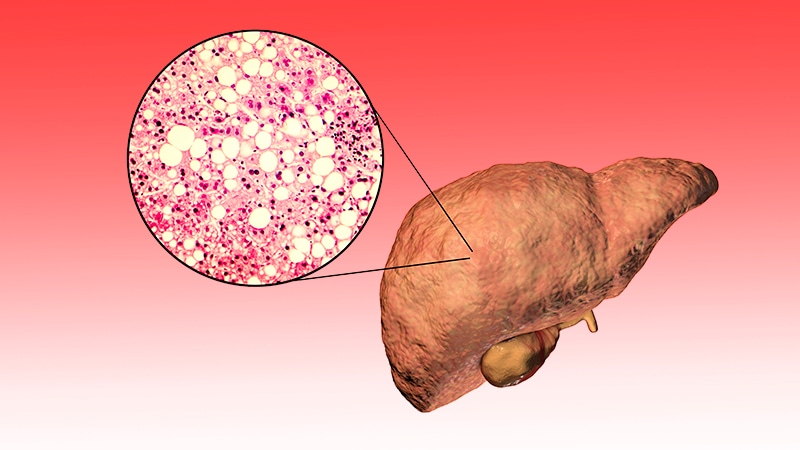
アムステルダム – 1日1回、エフルシフェルミンの50 mgの用量は、補償患者の96週間で線維症を減少させました 肝硬変 第2Bの対称性試験の結果によると、代謝機能障害関連脂肪性肝炎(MASH)のため、プラセボと比較して脂肪性肝炎(MASH)が36週間で有意に減少しませんでした(一次エンドポイント)。
Efruxiferminは、長時間作用型の二価の線維芽細胞成長因子21アナログです。 96週間の治療で、統計的に有意な29%の患者は、プラセボの11%と比較して、マッシュの悪化(二次的結果)の少なくとも1段階の線維症改善の段階を有していました。
また、結果は、マッシュ関連の組織学的所見、肝臓損傷と線維症の非侵襲的マーカー、および96週間のグルコースと脂質代謝のマーカーの改善を示唆しました。現在、エフキシフェルミンの50 mgの用量がフェーズ3の開発で調査されています。
テキサス州ヒューストン・メソジスト病院でのシェリーとアラン・コノバーの肝臓病および移植センターのアカデミック臨床医のマゼン・ヌレディン、MHSCは、肝臓(EASL)議会の欧州研究協会(EASL)会議2025でここで調査結果を発表しました。 ニューイングランド医学ジャーナル。
Noureddin氏は、初めて、彼らはレジメンで「有意で前例のない改善」を示したと述べた。彼は、「線維症の組織学的改善は、非侵襲的検査で裏付けられ、肝臓の損傷と機能の全体像を提示し、肝臓の健康がプラセボと比較してエフキシフェルミンによって維持またはわずかに改善されることを示唆する機能を提示する」と付け加えた。
肝不全と移植の主な原因であるにもかかわらず、現在、マッシュ関連肝硬変の線維症を逆転させる承認された治療法はありません。 Efruxiferminは、進行性の低い疾患(F2-F3線維症)の患者の初期の研究で抗線維性効果を示しています。現在、この第2Bの第2Bは、プラセボ対照二重盲検試験であり、4期の線維症で生検確定補償肝硬変を有するマッシュ患者において、エフキシフェルミンの有効性と安全性を示しています。
裁判
対称性は、米国、メキシコ、プエルトリコの45のサイトで行われました。マッシュ(チャイルドピューA)のために生検である補償された肝硬変で181人の成人を登録しました。 肥満。患者は肝抑制のリスクが高かった。
参加者は18〜75歳で、肝臓の組織学的特徴がマッシュと一致し、肝硬変を補償しました(5または6の子どものスコアで4期の線維症)。彼らも持っていました 2型糖尿病 またはの2つのコンポーネント メタボリックシンドローム 肥満、脂質異常症、血圧の上昇、および空腹時グルコースレベルの上昇を含む。患者の約80%が生検で確認されたマッシュを持っていました。
患者は、1:1:1の比率で毎週皮下エフルキシフェルミン(28 mgまたは50 mg)またはプラセボを投与されました。肝生検は36週目と96週目に得られ、治療意図と安全分析に含まれていました。全体として、36週目の154人の患者、96週目に134人の患者に肝生検データが利用可能でした。
主要エンドポイントは、36週目にマッシュの悪化をせずに少なくとも1つの線維症の段階を減少させたが、同じ測定では96週目の二次的な結果を含む。
36週間で、治療を意図した分析では、プラセボ群で8/61人の患者(13%)、28 mg Efruxifermin群で10/57人の患者(18%)でマッシュを悪化させずに線維症の減少が見られました(95%CI、-11〜17; p = .62)、および50 mg Efruxiferminグループの12/63患者(19%)(95%CI、-10〜18; p = .52)。
36週間の完了分析を参照して、Noureddinは次のように報告しました。 [and 22% on the 28-mg dose]。彼らが最大96週間まで治療を継続すると、最大39%の改善が見られました [50-mg dose] 15%のプラセボと比較して、マッシュの悪化なしに1つの段階で線維症 [and 29% with 28 mg]。これは24%の違いです [between placebo and 50 mg] それは統計的に有意でした [P
In the intent-to-treat analysis, at week 96, a reduction in fibrosis without worsening of MASH occurred in 7/61 patients (11%) in the placebo group, in 12/57 patients (21%) in the 28 mg efruxifermin group (95% CI, -4 to 24), and in 18/63 patients (29%) in the 50 mg efruxifermin group (95% CI, 2-30). “It was up to 29% in the 50 mg compared with 11%, and that’s an 18% statistically significant difference [P
The proportion of week 36 responders who sustained response to week 96 were 50% (n = 4), 67% (n = 6), and 75% (n = 9), in the placebo, 28 mg, and 50 mg groups, respectively. Expanded response (non-response at week 36 but response at week 96) was 8% (n = 3), 19% (n = 6), and 26% (n = 9) respectively.
“This emphasizes the role of ongoing treatment in cirrhotic patients,” said Noureddin. He also added that they saw “consistent responses across multiple baseline subgroups for the primary histological endpoint and at week 96 with the 50 mg.”
Nearly all participants (99% on efruxifermin and 97% on placebo) reported adverse events. Any serious adverse events were reported in 26%, 24%, and 18% in the 28 mg, 50 mg, and placebo groups, respectively. Gastrointestinal side effects were most common: diarrhea (42%, 54%, and 30% on 28 mg, 50 mg, and placebo, respectively), nausea (30%, 46%, 30%, respectively), and increased appetite (16%, 40%, 7%, respectively) and mostly of mild-to-moderate nature. Administration-site reactions (erythema) were also more common with efruxifermin (13%, 16%, and 6%, respectively). After week 36 and prior to week 96, discontinuations due to adverse events were 0%, 2%, and 3% in the placebo, 28 mg, and 50 mg, respectively. “After week 36, there were very few discontinuations due to side effects,” reported Noureddin.
Poor bone health is a common complication of cirrhosis, and across all treatment groups, 43% of participants had osteopenia at baseline, but only 4% were treated with bisphosphonates. Placebo-adjusted, significant relative reductions in bone mineral density (-5%) for spine and hip were observed for both treatment groups at week 96 or about 2%-3% per year. The number of participants experiencing fractures was equal across all treatment groups, added Noureddin.
Commenting on the study, delegate and chairman of the Global NASH Council, Zobair M Younossi, MD, professor and chairman of the department of medicine at Inova Fairfax Medical Campus, Fairfax County, Virgina, told Medscape Medical News, “The key to this whole area is that there are treatments that have been developed for non-cirrhotic MASH, F2 and F3, but there is currently nothing that is positive for people with cirrhosis and MASH. This study shows there is improvement in all categories even in those with diabetes and even when they are controlled for some alcohol consumption.” He added, “I think that the best aspect of this is that it gives us a potential treatment for those patients who are at highest risk for bad outcomes in MASLD, which are those with cirrhosis.”
The study was supported by Akero Therapeutics. Noureddin declared grants, consultant roles, and stock options from many pharmaceutical companies, including Akero. Younossi reported no relevant financial relationships.
The findings were presented during a dedicated session on AI and hepatology, May 8, 2025, at the EASL Congress 2025.