1761399329
2025-10-24 07:00:00
AI は情熱に代わることはできません。限られたリソースで安全な意思決定を行い、旅行者を第一に考えるために協力し、テクノロジーではなく問題に焦点を当てます。
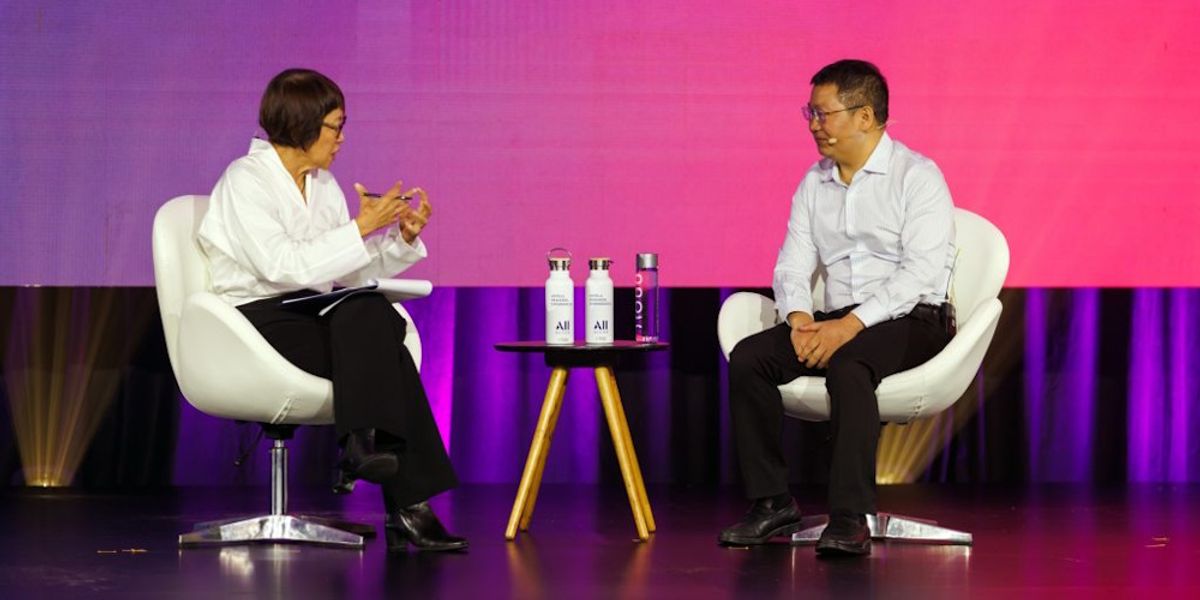
珍しい公の場で、 トリップドットコムグループのCOO Xing Xiong氏は、WiTの20周年記念カンファレンスで講演するために「エンジンルーム」から出てきた。
技術者からリーダーに転身したシオン氏は、26 年以上旅行に携わっており、そのうちの最後の 10 年は、世界最大のオンライン旅行会社の 1 つを支えるインフラストラクチャの構築に静かに費やしてきました。
冷静かつ正確、そして深く思慮深い彼は、混乱を乗り切ること、AI の限界、そしてなぜ人間の情熱が旅行において最もかけがえのない資産であり続けるのかについて語った。
WiT の創設者である Yeoh Siew Hoon との会話から得た重要なポイントを以下に示します。
不確実性と規律の AI 時代
「今日テクノロジーについて話すとき、80% または 90% の確率で AI という言葉が聞かれるでしょう」と Xiong 氏は言います。 「それはエキサイティングなことですが、それが私たちをどこに導くのかは誰にもわかりません。」
Xiong 氏にとって、AI をめぐる現在の熱狂は、イノベーションに関するものであると同時に、取り残されることへの恐怖に関するものでもあります。 「人々が恐れているため、数兆ドルが投資されている。しかし、未知の部分が多すぎる」と同氏は語った。 「私たちの規模では、リソースは限られています。そのため、安全な決定を下すこと、つまり長期的な価値が最も期待できるものにエネルギーを注ぐことが非常に重要です。」
Trip.com Group のような巨大な企業であっても、スピードと同じくらい集中力と抑制が重要であることを思い出させてくれました。
商業を超えた価値創造
Xiong の哲学の中心には、単純な原則があります。それは、テクノロジーを使用して問題を解決すれば、コマーシャルが後から続くというものです。
2024年にトリップ社が開催した航空カンファレンスで、シオン氏は「航空会社、OTA、空港のいずれであっても、旅行者とエコシステムに価値を生み出すことは全員の利益になる」と述べた。[–newsletter id=’1′–That, however, requires a shift in mindset. “The systems weren’t built for retaining or collaboration,” he said. “You can’t fix that alone. Airlines, OTAs, IT providers—everyone has to work together.”
True innovation, Xiong believes, is human-led and tech-enabled.
“It’s a combination of both—the willingness to work together, the trust, putting the customer first. By the end of the day, technology is what enables efficiency and reliability, but the biggest beneficiary must be the traveler.”
The 1% mindset shift
When asked about the constant commercial tug-of-war between partners, Xiong was characteristically blunt.
“We should not let that 1% commission bother the remaining 99%,” he said.
That single line summed up his worldview: Fix the fundamentals first, and the margins will follow.
Solving for vibe, not just inventory
As travelers search for “vibe, not features,” Xiong pointed out that the answer begins, as always, with data synchronization.
He spoke passionately about the need to fix fragmented pipelines that make travel feel clunky.
“People often underestimate how important data synchronization is. Without it, systems break down. We waste capital because we didn’t plan technology correctly at the start.”
It’s why Trip.com Group has invested heavily in solving what he calls “the invisible plumbing of travel”—the standards, connectivity and data flow that make the “connected trip” possible.
AI: Empowerment, not existential threat
While the world debates AI doom, Xiong is unfazed.
“AI is just one of the milestones of human advancement,” he said. “It’s an empowerment, not a replacement. Customer needs haven’t changed—people still want comfort and to see more of the world. New technology just helps us serve them better.”
Unity as the next frontier
From New Distribution Capability to low-cost carrier systems, fragmentation remains the industry’s Achilles’ heel. Xiong sees the solution in unification and collaboration.
“It looks like a simple technology problem,” he said, citing Trip.com Group’s work with Navitaire, “But it’s actually not. Airlines, aggregators, OTAs—many don’t talk to each other enough. We need new standards so that the whole world of travelers can have a smoother experience.”
Asia Pacific: Trip’s engine of growth
Looking ahead to 2030, when Trip.com aspires to be the world’s No. 1 OTA, Xiong was clear about where the growth will come from: Asia Pacific.
“This region has the youngest population and the fastest economic growth,” he said. “That’s where most of our investment and focus are.”
While China remains Trip’s biggest revenue contributor, China inbound—not just outbound—is emerging as a strategic priority. “We’re asking our teams to triple inbound,” he said.
Faith in human nature
When asked how Trip could help disperse overtourism, Xiong’s answer was unexpectedly humanist.
“Travelers will do it themselves,” he said. “Information is easy to get, and people will want to discover new places by their own desire.”
While not everyone may agree and feel the problem may need some nudging on OTAs’ part—they have the data and reach—Xiong’s answer reflects his confidence in curiosity: that technology amplifies exploration but doesn’t dictate it.
Leading as a technologist: Focus on solving problems
As a self-confessed engineer more comfortable in the engine room than boardroom, with systems rather than being in the spotlight, Xiong reflected on leadership.
“Technologists can’t provide much value if we don’t put our smartness towards solving our industry’s hardest problems,” he said. “Problem-solving is the central part of our role. And we must stay open-minded – because in a few years, we won’t be talking about AI. It will be something new.”
That focus on problem-solving and adaptability, he believes, is what keeps a technologist relevant.
AI can’t replace passion
Trip.com Group’s AI-driven customer service is legendary for its efficiency, yet Xiong was quick to credit the humans behind it. “The easier work is already taken over by AI. But the problems left for humans are harder and more valuable.”
He added, “AI doesn’t have passion. People do. That passion, that willingness to solve problems—that’s our biggest asset.”
On Chinese tech and the human code
Xiong sees Chinese tech innovation accelerating at the application layer, while still catching up in core software and chip design. But, he said, “in today’s world, there’s no East or West. Technology is open-source; it belongs to everyone. That’s a great thing for humanity.”
For the next generation of technologists, his advice was simple and timeless: “Be a better person. Be respectful, unselfish and willing to cooperate. Skills are important, but human merits last longer.”
The future is smaller and more personal
Asked what travel experience might disappear in 20 years, Xiong predicted the end of mass group tours.
“The next generation of travelers, even when they’re 80, will want small groups, customization and to follow their own will,” he said. “The big group tours will be redefined.”
#Trip.com #Group #の #COO #Xing #Xiong #氏が #時代を振り返る