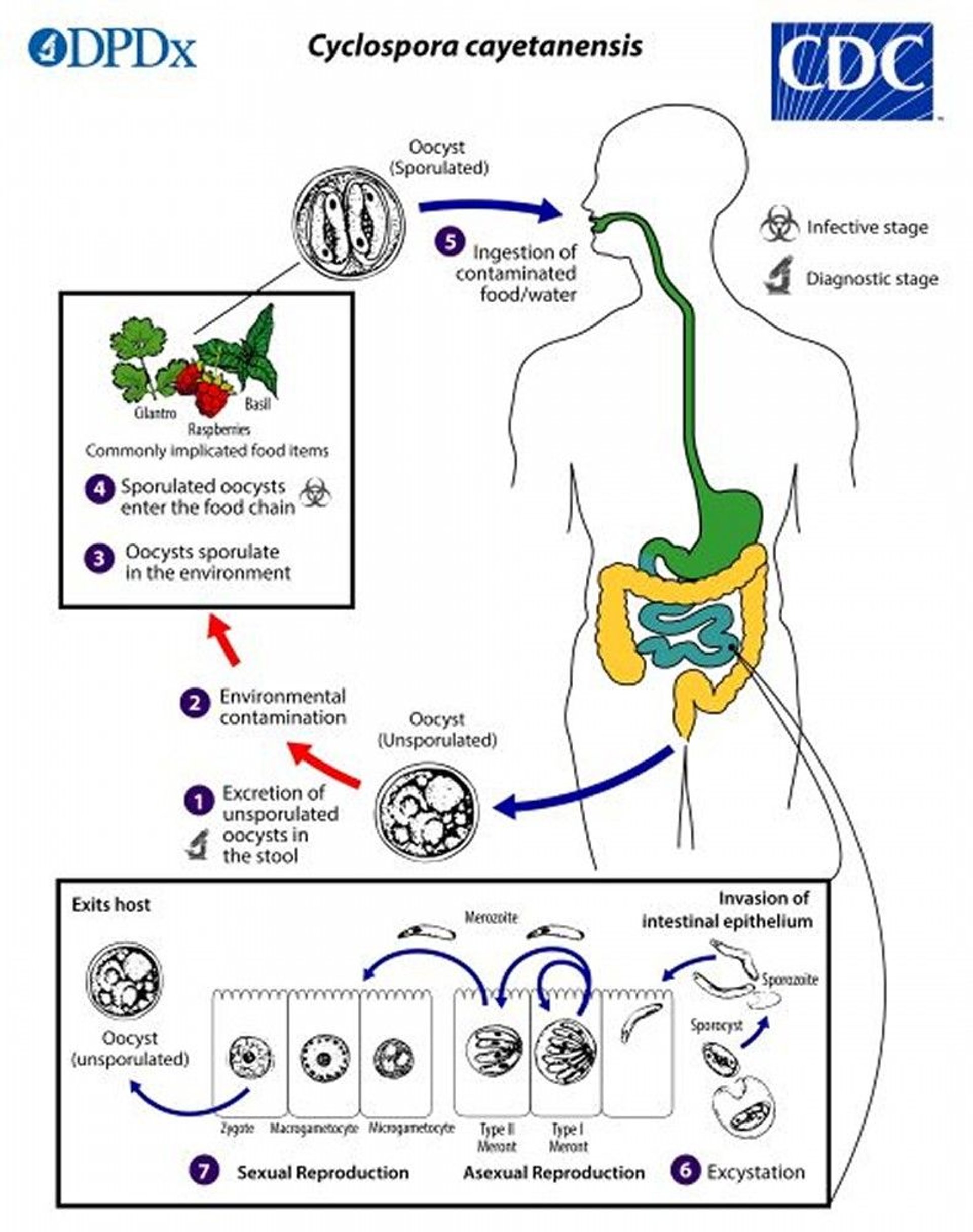
The Centers for Disease Control and Prevention (CDC) is currently investigating a rise in cases of cyclosporiasis, an intestinal illness caused by the parasite Cyclospora. According to federal health authorities, cases have been detected across 34 states. As of Tuesday, the CDC reported 1,645 confirmed cases, though the agency notes that the true number of infections is likely much higher. This is because the figure represents only cases reported directly to the CDC by states, and there is a lag between symptom onset and reporting. Many individuals also recover without medical treatment.
1,645 Cyclosporiasis Cases Reported by the CDC
Nationwide, there have been 141 hospitalizations and no deaths reported as of Thursday. However, a separate set of data indicates that 843 cases have been documented in 31 states since May, with 86 hospital admissions. The CDC further notes that over 1,500 cases require “further analysis.”

The infection is characterized by symptoms including watery diarrhea, stomach cramps, nausea, fatigue, loss of appetite, weight loss, vomiting, and a low-grade fever. Symptoms can linger for weeks without treatment, and it may take weeks for them to appear after consuming contaminated food. The CDC has stated that humans contract the parasite by consuming food or water tainted with excrement. Gwen Biggerstaff, deputy director of the CDC’s Division of Foodborne, Waterborne, and Environmental Diseases, stated at a press conference: “The source of this outbreak is what we eat or drink — not casual contact with someone who’s sick.”
Michigan Records 3,309 Cases Amid Midwest and Northeast Surge
While cyclosporiasis typically rises during the spring and summer, the CDC reported that multiple states have seen a larger jump in cases over a two-week period compared to the same timeframe last year, when only 249 cases were reported nationally. Hardest-hit areas appear to be in the Midwest and Northeast, including New York and Michigan. Specifically, Michigan reported 3,309 cases as of Tuesday.
Health officials are investigating clusters of cases that may be epidemiologically linked, including a multistate outbreak involving Michigan, Ohio, West Virginia, and Kentucky. The Ohio Department of Health has reported 177 cases. Despite the rising numbers, officials have not yet identified the specific source of the outbreak. There is no official list of foods to avoid, and no single ingredient has been singled out.
Taco Bell Removes Ingredients Following Nationwide Recall
In the context of this investigation, Taco Bell has been mentioned in reports regarding a growing outbreak associated with tainted vegetables. According to reports, some Taco Bell stores in Michigan alerted patrons that they were forced to pull lettuce, cilantro, onion, pico de gallo, and guacamole from the menu due to a nationwide recall. While some people who became ill reported eating at Taco Bell, others did not, suggesting the chain is unlikely to be the sole source of the outbreak. Reports indicate that it is “good the chain has already voluntarily stopped serving a number of items.”
Previous outbreaks have been linked to fresh produce, particularly items eaten raw, such as leafy greens, lettuce, salad mixes, fresh herbs like cilantro, basil, and parsley, and berries including raspberries and blackberries. In 2018, McDonald’s removed salads from restaurants in 14 states after an investigation, and in 2013, tainted lettuce imported from Mexico was suspected of sickening 400 people.
Some public health experts have expressed concern that recent reductions to federal foodborne disease surveillance and broader staffing cuts could make investigations more challenging. Because the source remains under investigation, experts recommend taking precautions with fresh produce. Readers concerned about symptoms or food safety should consult with qualified medical professionals.
Find more reporting in our 健康 section.